Research and education only. This is a reflective account of a private, unreleased prototype. It does not include source code, offsets, commands, operational settings, or advice for bypassing game protections.
I built a small Counter-Strike 2 prototype with AI assistance to understand a harder question: how quickly can general-purpose tools turn curiosity into something that harms a competitive community?
The answer was uncomfortable. AI did not invent the underlying techniques, but it made it easier to connect public information, interface ideas, and programming concepts into a polished-looking tool. That reduction in friction is exactly why builders need to think about misuse before a project becomes shareable.
Reverse engineering: joining the pieces
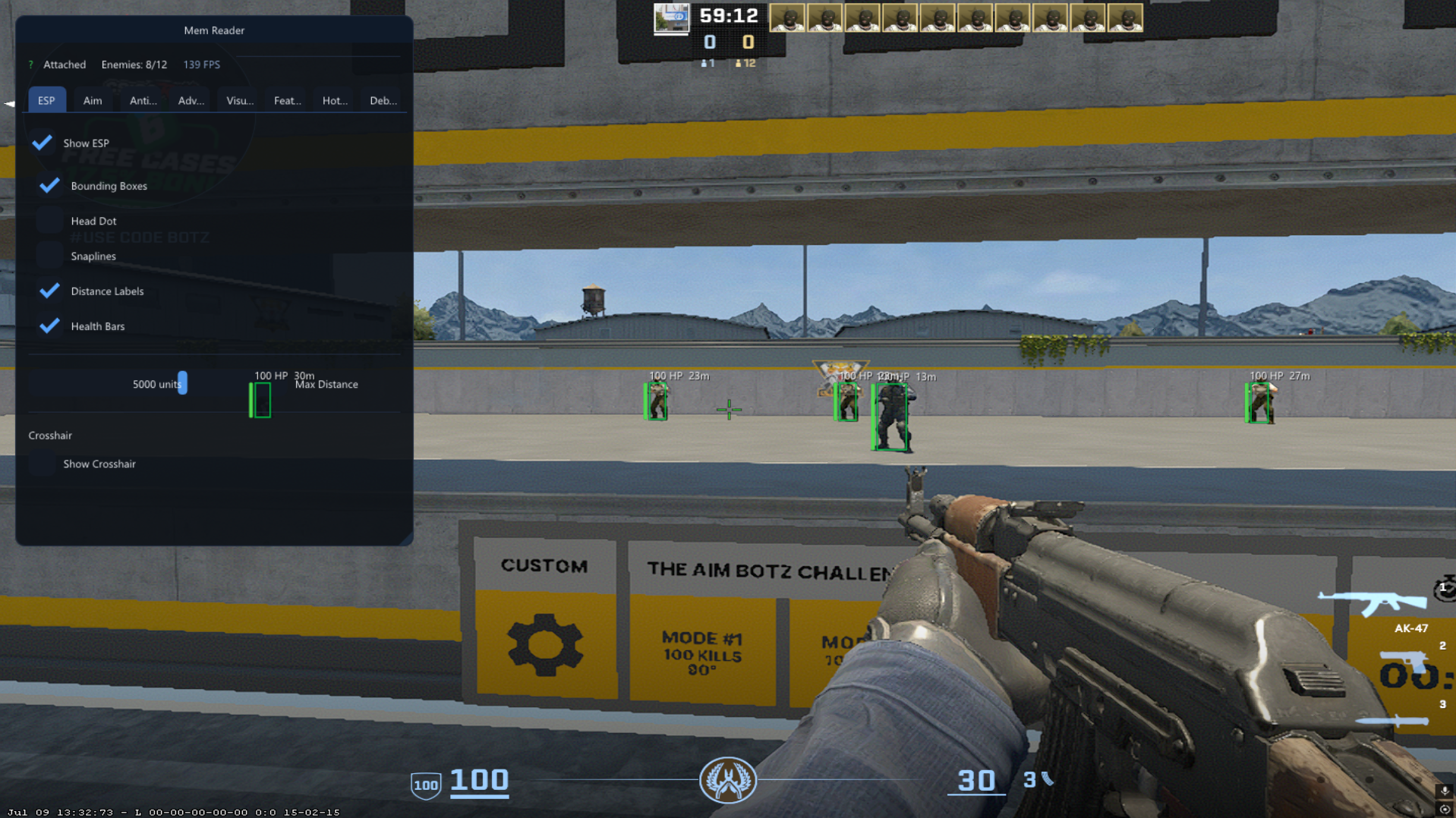
At a high level, the private experiment connected process inspection, memory-layout research, coordinate projection, interface design, and input automation into one external prototype. The interesting engineering challenge was not one magic trick; it was understanding how small, public fragments of technical knowledge can be composed into a view of a running game.
AI as a reverse-engineering multiplier
AI can accelerate legitimate learning, debugging, translation, and prototyping. In this case, it helped turn unfamiliar concepts into a clearer map of questions: how a game represents state, how an external program can visualize it, and where the integrity boundary sits. The same speed can also reduce the expertise needed to turn that map into unfair automation.
That is why “educational” is not enough on its own. Research should minimize operational detail, avoid distributing working artifacts, and describe defenses with the same care used to describe the problem.
From public dumps to a game-state model
This research consulted cs2-dumper, a public project that publishes game-structure metadata. Public metadata can support compatibility research and defensive analysis, but it can also be repurposed in ways its maintainers did not intend. Availability does not remove responsibility for how information is combined, framed, or released.
When technical research becomes a cheat
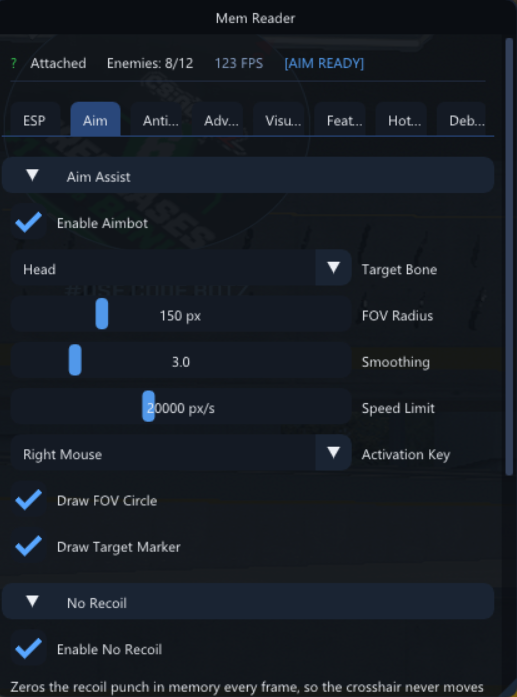
Unauthorized overlays and automation damage trust. They make honest improvement feel less meaningful, create suspicion around strong performances, raise moderation costs, and pressure other players to cheat merely to keep up. The damage is social as well as technical.
What this reveals about cheating
- Design detection around behavior and integrity signals, not only one known tool or signature.
- Study suspicious input timing, impossible consistency, unusual overlay interactions, and integrity-boundary violations in aggregate.
- Give players clear reporting paths and communicate enforcement outcomes without teaching evasion.
- Build product and AI safeguards that refuse to turn abuse intent into executable instructions.

A safe prompt for research discussion
role: fair_play_research_assistant
goal: analyze abuse risks and defensive mitigations for unauthorized game overlays and input automation
allowed_output:
  - high-level risk analysis
  - player and community impact
  - defender telemetry categories
  - non-operational mitigation ideas
prohibited_output:
  - implementation steps
  - source code or pseudocode
  - offsets, addresses, commands, or settings
  - bypass, evasion, or deployment advice
  - instructions for building or operating a cheat
Where I draw the line
I am not releasing the project, binaries, offsets, or a construction guide. The useful outcome of this experiment is a better understanding of how misuse becomes accessible—and a reminder that technical skill should be paired with restraint. The goal is to help people recognize the risk, protect competitive spaces, and keep AI-assisted work pointed toward legitimate research.